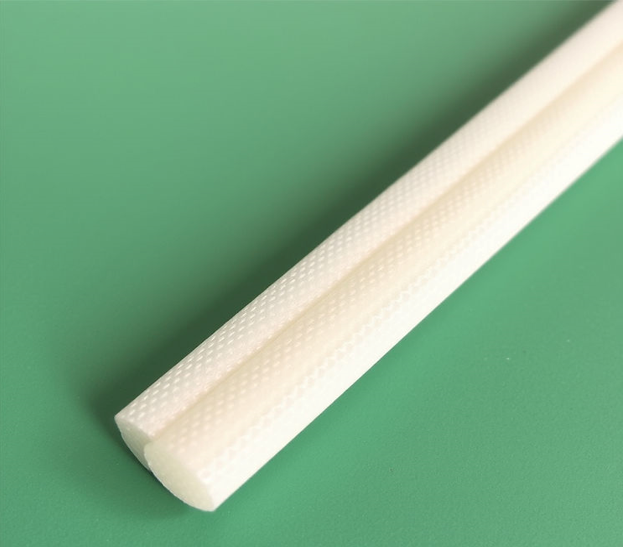
Modern engineering applications often require materials that go beyond basic strength and durability. Industries such as aerospace, electronics, and precision manufacturing depend on materials that can perform under extreme conditions while offering unique functional properties. Two such advanced materials are boron nitride rods and nitinol sheets. Each provides distinct advantages that make them suitable for specialized engineering applications.
Understanding how these materials perform helps engineers and industrial buyers select the right solution for complex systems.
Overview of Boron Nitride Rod
A boron nitride rod is a ceramic material known for its excellent thermal stability and electrical insulation. It is widely used in high-temperature environments where consistent performance is required.
One of the key advantages of boron nitride is its ability to maintain its properties even at elevated temperatures. It is also easier to machine compared to many other ceramics, which allows for precise component design.
Key Properties of Boron Nitride Rod
Boron nitride rods offer several important characteristics for advanced engineering. It provides excellent resistance to high temperatures, making it suitable for thermal systems and furnace applications.
It is a strong electrical insulator, even at elevated temperatures, which is important in electronic and high-voltage systems. It has low friction, which allows it to perform well in applications that require smooth movement. It also resists chemical corrosion, ensuring durability in harsh environments.
Overview of Nitinol Sheet
A nitinol sheet is a unique metal alloy made from nickel and titanium. It is known for its shape memory effect and flexibility, which set it apart from traditional metals.
This material can return to its original shape after deformation when exposed to specific temperature conditions. This property makes it valuable in applications that require movement and adaptability.
Key Properties of Nitinol Sheet
Nitinol sheets offer several advantages in advanced engineering. It has the ability to remember and return to its original shape, which allows it to perform functions that would require complex mechanical systems.
It is highly flexible and can withstand repeated deformation without permanent damage. It offers good resistance to corrosion, making it suitable for use in various environments. It also has good fatigue resistance, which ensures long-term performance under repeated stress.
Applications of Boron Nitride Rod
Boron nitride rods are widely used in high-temperature and electrically sensitive applications. It is commonly used in furnace systems as insulating components and supports. It helps maintain stability while preventing electrical conductivity.
In semiconductor manufacturing, boron nitride is used to ensure clean and stable processing conditions. It is also used in metal casting applications where heat resistance and nonreactive properties are required.
Applications of Nitinol Sheet
Nitinol sheet is used in applications that require flexibility and movement. In engineering systems, it is used in actuators that respond to temperature changes. These actuators are used in control systems and automated devices.
In aerospace and robotics, nitinol sheets are used in components that require adaptive behavior and precise movement. It is also used in medical devices where flexibility and reliability are critical.
Comparing Their Performance
A boron nitride rod and a nitinol sheet serve very different purposes in engineering systems. Boron nitride is a ceramic that focuses on thermal stability, electrical insulation, and resistance to harsh environments.
Nitinol is a metal alloy that provides flexibility, shape memory, and dynamic movement. While boron nitride is used for stability and protection, nitinol is used for functionality and motion.
Choosing the Right Material
Selecting between a Boron Nitride Rod and a Nitinol Sheet depends on the requirements of the application. If the system requires high temperature resistance, electrical insulation, and chemical stability, boron nitride is the better choice.
If the application requires movement, flexibility, and adaptive behavior, nitinol is more suitable. Engineers should consider operating conditions, mechanical requirements, and desired functionality when selecting materials.
Conclusion
Boron nitride rods and nitinol sheets are advanced materials that offer unique benefits for modern engineering applications. Each material provides specific advantages that make it suitable for different roles within a system.
By understanding their properties and performance, engineers and industrial buyers can select the right material to improve efficiency, enhance functionality, and ensure long-term reliability in advanced engineering systems.