
There is a conversation that happens between couples planning their wedding that rarely gets spoken aloud, because saying it feels somehow wrong. One of them — sometimes both — looks at the growing guest list, the expanding logistics, the mounting cost of feeding and seating and entertaining a hundred and twenty people, and thinks: what if we just didn’t? What if the wedding was actually about us, not about managing everyone else’s experience of us? What if the most important moment of our lives didn’t require a production team, a seating chart, and six months of family diplomacy? Most couples push that thought aside and proceed with the expected version of events. A growing number are deciding to listen to it instead.
Elopements and intimate destination weddings for two have moved from the fringes of the wedding market to something genuinely mainstream, and Bali has been at the center of that shift. The island’s combination of extraordinary natural settings, deeply embedded ceremonial culture, and professional wedding infrastructure makes it one of the most compelling places in the world to get married with no audience beyond the person you’re marrying. There is something about the scale of Bali’s landscapes — the rice terraces, the temple gates, the coastline at the hour before sunset — that makes an intimate ceremony feel larger rather than smaller. The setting provides everything a hundred guests would have been recruited to provide: a sense of occasion, of significance, of the moment deserving the attention it receives.
Planning Bali wedding packages for two requires a different kind of thinking than planning a large wedding, and the distinction runs deeper than simply reducing the guest count. A wedding for two is not a scaled-down version of a wedding for a hundred. It is a fundamentally different experience with different priorities, different pacing, and different definitions of success. Without guests to entertain, the day can be structured entirely around what the couple actually wants — which is often very different from what a traditional wedding format dictates. The ceremony can happen at sunrise if that’s when the light is most extraordinary. The day can include a private dinner on a cliff rather than a reception in a ballroom. The photography session can take as long as it needs to rather than fitting into a twenty-minute window between cocktail hour and the first dance. The entire architecture of the day can reflect two people’s actual preferences rather than the accumulated expectations of everyone they know.
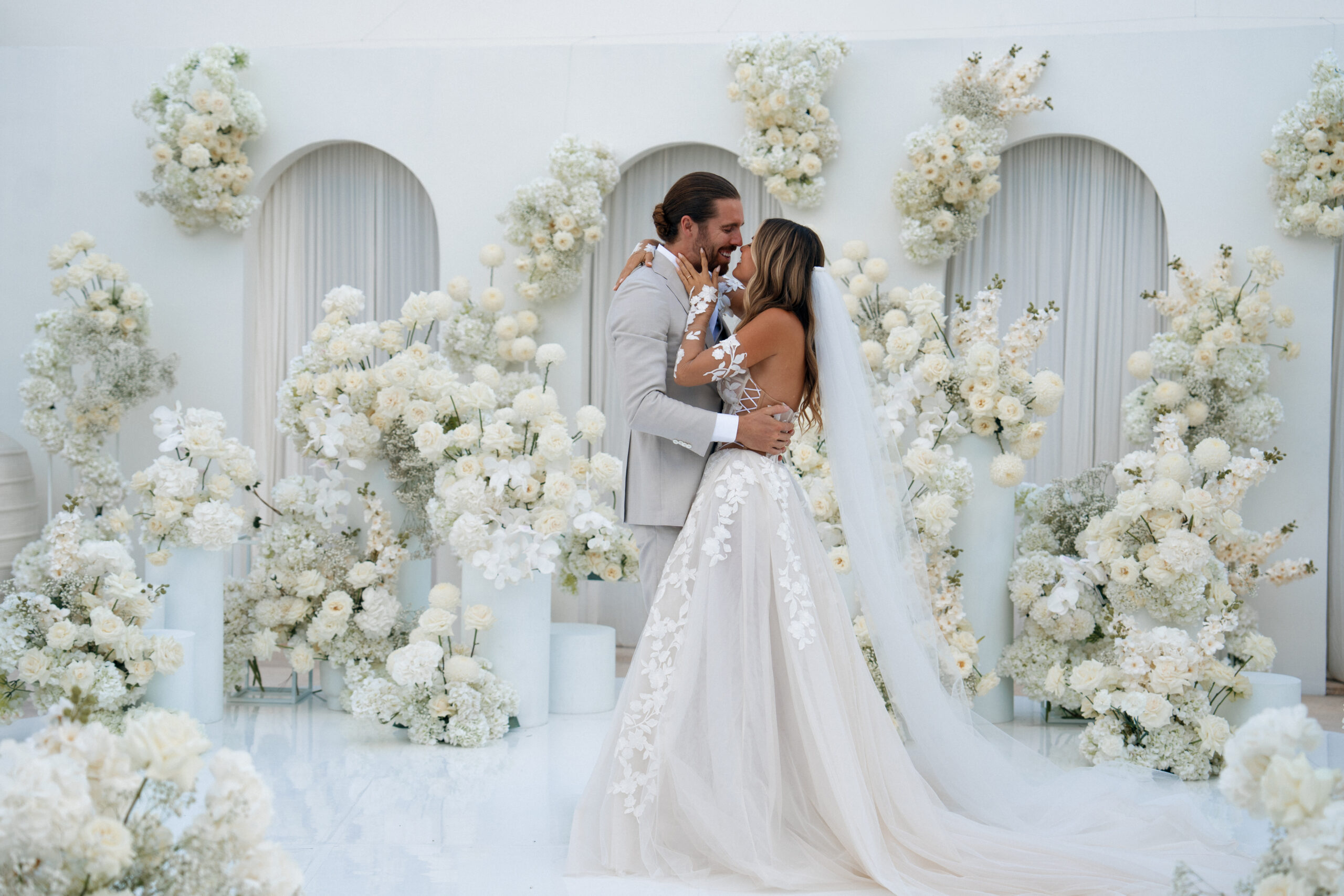
Budget is one of the most obvious advantages of a wedding for two, but it deserves examination beyond the simple arithmetic of fewer guests equaling lower catering costs. The savings in a truly intimate wedding go deeper than headcount reduction. Without the social obligations that large weddings generate — the distant relatives who must be invited once certain family members are included, the colleagues whose exclusion would create professional awkwardness, the childhood friends whose presence requires reciprocating invitations from a decade ago — the entire event can be designed without compromise. Every element reflects a genuine choice rather than a social calculation. The budget that might have fed a hundred people at a standard per-head rate can instead fund an extraordinary experience for two: a private villa for several days, a photographer whose work is genuinely exceptional, floristry that transforms the ceremony space into something neither partner will ever forget, a dinner at a restaurant that would have been financially impossible to extend to a large group.
The emotional texture of a wedding for two is also something couples who have chosen this path describe in terms that those who haven’t often find surprising. The absence of an audience, rather than diminishing the significance of the ceremony, tends to intensify it. There is no performance anxiety, no awareness of being watched by people whose reactions matter, no split attention between the person you’re marrying and the room full of people expecting to be moved. The ceremony happens between two people, witnessed perhaps by a small professional team and the landscape around them, and the intimacy of that experience produces a quality of presence that large weddings — for all their warmth and celebration — rarely achieve. Couples who eloped or married privately consistently describe the ceremony itself as more emotionally vivid, more fully inhabited, than they expected.
Practicalities for a two-person Bali wedding also unfold differently than most couples initially imagine. Legal requirements for foreign nationals marrying in Bali apply regardless of guest count, which means documentation preparation and the question of symbolic versus legally binding ceremony structure need to be addressed regardless of scale. The right planning team handles these elements as a matter of course — understanding which structures work for different nationalities, which officiants are experienced with international couples, and how to design a ceremony that feels genuinely meaningful whether or not it carries immediate legal weight in the couple’s home country. Photography and videography take on heightened importance when the wedding party is two people, because the images and footage become the primary way the event is shared with family and friends who weren’t present — making the quality of those professionals more consequential, not less, than in a larger event.
What Bali offers couples who choose to get married as two is access to an extraordinary place, within a culture that understands ceremony, supported by professionals who have helped many couples create exactly this kind of experience. The island doesn’t require a large wedding to feel significant. It provides significance freely, to anyone willing to be present enough to receive it.
